
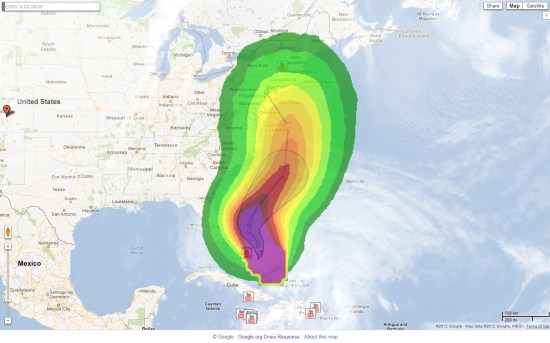
 In Brooklyn, we have felt the effects of Hurricane Sandy first hand and our hearts go out to all who have been touched by this devastating storm. Not only did it wreak havoc in the northeast but it has also effected some of the worlds biggest coffee producing countries.
Reuters, Havnnna- Hurricane Sandy decimated the Cuban coffee crop and delivered a major setback to renovation of old plantations when it ripped through the eastern part of the country late last week, according to scattered media reports.
The storm left between 20 percent and 30 percent of the crop on the ground, damaged processing centers and roads and felled thousands of trees upon plantations as it pummeled the Sierra Maestra Mountains, where 92 percent of the crop is grown.
The coffee harvest runs from September through January, but peaks in October and November.
Coffee production was already expected to weigh in at some 5,300 tonnes of semiprocessed beans, compared with 7,100 tonnes in the previous season and an initial plan of 8,500 tonnes.
A Reuters report now estimates output will be below 4,000 tonnes, the lowest in more than a century. The official Granma newspaper reported on Monday that Guantanamo province, the country’s second producer after Santiago de Cuba, “lost 174,475 cans of beans” and “47 processing centers were damaged”.
Cuba often reports coffee output in cans, with 525 cans equal to a tonne. Still-to-be-quantified losses were also reported in the eastern provinces of Granma and Holguin, the country’s third and fourth producers. The devastation was far worse in Santiago, which took the brunt of the storm and where losses were still being tallied.
Songo-La Maya is an agricultural municipality whose main crop is coffee and the initial figures for coffee ouput indicate a loss of 84,000 cans, while 4,500 hectares of plantations and another 650 in development are damaged due to the trees that fell on them as reported in the the province’s newspaper, Sierra Maestra, on Sunday. There are eight coffee-producing municipalities in Santiago de Cuba.
The National Information Agency, reporting from the Cruce de los Banos municipality on Saturday, said: “Initial estimates by municipal authorities indicate more than 300 hectares of coffee plantations damaged by falling trees and dozens of tonnes of mature beans felled and washed away.”
How much of the remaining and now quickly ripening coffee beans could be picked and processed, given the destruction Sandy left behind, was unclear.